Dysinfluence / Marc Owen Jones
About
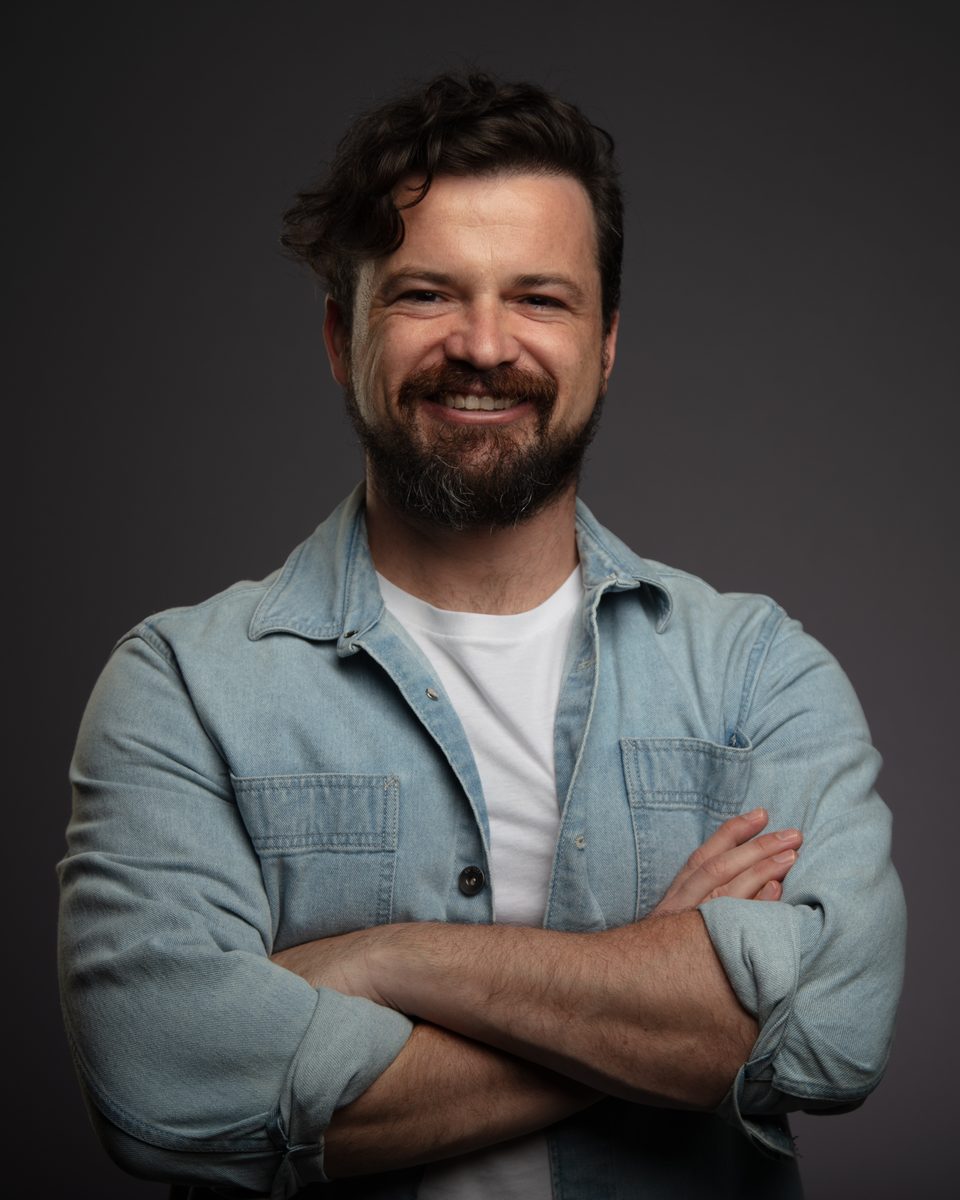
Marc Owen Jones is an associate professor of media analytics at Northwestern University in Qatar. His research and teaching examine disinformation, digital authoritarianism, and political repression, with a particular focus on how transnational influence operations, harassment campaigns, and digital control mechanisms emerge from—or target—the Middle East.
He is the author of two single-authored monographs: Political Repression in Bahrain (Cambridge University Press, 2020) and Digital Authoritarianism in the Middle East: Deception, Disinformation, and Social Media (Hurst / Oxford University Press, 2022), the latter named among Foreign Affairs’ 2023 Books of the Year. He has also edited several influential volumes on Bahrain and the Gulf, including Bahrain’s Uprising (Zed Books, 2015) and Gulfization of the Arab World (Gerlach Press, 2018). His recent work includes a major single-authored essay in Daedalus (2025), which reflects on the ethics, risks, and epistemic challenges of researching disinformation, transnational repression, and digital authoritarianism in the post-truth age. Together, this body of work advances a socio-technically grounded and empirically driven account of how repression, propaganda, and power adapt to digital media systems.
Alongside his scholarly research, Jones is widely known for pioneering investigations into coordinated disinformation and harassment campaigns. His work has exposed networks of fake journalists, state-aligned bot operations targeting Western policymakers, and cross-platform influence efforts aimed at journalists, academics, and activists. His analysis of disinformation surrounding the murder of Jamal Khashoggi was highlighted by The New York Times as its “Quote of the Day” in 2018, and his investigative research has been cited by Reuters, the BBC, the Guardian, The Atlantic, The Wall Street Journal, and other major outlets. In a separate case, his archival research led him to challenge the UK Foreign Office in a tribunal over withheld information relating to torture allegations in Bahrain during the 1970s.
Raised between Bahrain and Saudi Arabia, and having lived and worked in Sudan, Syria, Germany, and the United Kingdom, Jones brings a regionally grounded perspective to the study of media, power, and informational controls. He earned his PhD in Government and International Affairs from Durham University in 2016, followed by a postdoctoral fellowship at the University of Tübingen. He later joined the University of Exeter, where he transitioned from postdoctoral researcher to permanent lecturer, before serving from 2018 to 2024 as assistant and then associate professor of Middle East Studies and digital humanities at Hamad bin Khalifa University.
Jones is a frequent public commentator and columnist, with articles having appeared in The Washington Post, CNN, Time, The Independent, The New Statesman, Middle East Eye and Al Jazeera English, where he is a regular contributor. He also appears regularly on international broadcast media, including the BBC, NPR, LBC, and CBC News, discussing disinformation, digital repression, and global influence operations. His expertise has led to invited lectures at institutions such as Princeton University, the University of Oxford, New York University, and the London School of Economics, as well as consultancy roles with states, governments, and NGOs.
His work has been recognized with multiple awards, including the 2016 Best Thesis Prize from the Association for Gulf and Arabian Peninsula Studies and the British Council’s UK Alumni Professional Achievement Award (Qatar) in 2021. He has also received several teaching awards at Exeter University and Hamad bin Khalifa University. In addition to his academic appointment, Jones is a non-resident fellow at the Middle East Council for Global Affairs, and was formerly on the Committee for Academic Freedom at the Middle East Studies Association.